
Stockholm Syndrome and the Lebon Prizes
It’s that time of the year again when, each morning, the Nobel committee, based in Stockholm, announces whom they have decided deserves recognition for their work in science, literature, and peace. As a child, I was fascinated by these prizes, and the people who received them – after all, their names made it into textbooks, and they were made out to be the best of mankind – intelligent, curious, generous, resilient, <insert favourite glorious adjective here>. Over the years, though, as I began to understand the history and inner workings of this prize, these illusions have slowly unravelled.
The origin story of the Nobel prize typically paints Alfred Nobel as a generous, altruistic entrepreneur who founded the prize with lofty ideas about how it’ll benefit humanity. But there’s another version, which suggests that Alfred Nobel was spurred into this action because he read his own obituary, which was published by a French newspaper that mistook his brother Ludvig’s death for his. The story goes that it was a brutal obituary, going as far as to call him the “merchant of death” because his fortune could be traced back to the development and distribution of dynamite. Reading the obituary, he realized that his legacy would be one of dishonour if he didn’t do anything about it, and so decided to donate his estate to celebrating science and culture. I don’t know if this is true, or if it’s simply an urban legend – there’s certainly no archival record of this particular obituary. Nevertheless, the fact remains that Alfred Nobel’s estate and, in turn, the funds for his namesake prize came from the sale of explosives. In some ways, I think of it like having an Exxon prize – or dare I say it, FIFA prize – launched today. Even if such a prize actually recognized good science, would it be something we should welcome and celebrate? And would it really compensate for the harms these institutions have knowingly unleashed upon society? I’m not the authority on this, but I am certain that I would be uncomfortable with venerating such a prize.
Besides the origins of the prize itself, it is a fact that the Nobel prizes are not awarded fairly. As of the writing of this article, only 67 women have won this prize, whereas over 900 men have been awarded it. This is not because women have contributed less to science, but rather because the contributions of women often get stolen by or simply (mis-)attributed to men. This discrepancy is exacerbated by the fact that Nobel laureates are selected from nominations. You cannot nominate yourself for a prize, of course, but nominators are invited, and often include current Nobel laureates. So, if you’re in the sphere of influence of a Nobel laureate, chances are they will nominate you for a prize when asked. This is why students and relatives of Nobel laureates are also themselves part of this exclusive club. This is also why pervasive societal biases bleed through into who ends up being invited to the (old boys’) club.
You might think scientists are objective people with only the best interests of science at heart, and that they would be unbiased in their nominations. But that isn’t really the case. Let’s consider an example. Who all did Albert Einstein – an individual who is almost synonymous with science – nominate for a Nobel prize? Since we’re past the statute of limitations for secrecy of the Nobel prize nominations (50 years), we can just look this up. (Here’s the list)[https://www.nobelprize.org/prizes/physics/1921/einstein/nominations/]: Max Planck, James Franck, Arthur Compton, Werner Heisenberg, Erwin Schrödinger, Otto Stern, Wolfgang Pauli, Walther Bothe, and Carl Bosch. There are at least two commonalities that I can spot between Einstein and his nominees.1 And every single one of his nominees was awarded a Nobel prize. In short, not all nominations are equal, and identity and privilege determine someone’s winning chances more than their contributions do.
These days, it is tacit knowledge that scientists sometimes campaign to be considered for an award, and can politick their way to it. The Nobel laureate Venki Ramakrishnan wrote a rather blunt memoir, titled Gene Machine: The Race to Decipher the Secrets of the Ribosome, in which he outlines the race not just to the solution of a scientific puzzle, but to acquiring the Nobel prize itself. Of course, politics alone won’t earn you a prize, but it can certainly help tip the odds in your favour. And if you don’t know that, or don’t want to play that particular political game, chances are you won’t really win it.
Another issue I take up with the Nobel prizes is that they are antiquated. Over its 126-year history, how science is done has changed a lot, yet little about the Nobel prize and how it is administered has changed. The Nobel committee loves tradition, and it cites tradition as one of the reasons it cannot be awarded posthumously, or to more than 3 people at a time. On the other hand, it seemed perfectly fine to add an entirely new prize – for Economics – in the 1960s, even though it went against the grain of tradition. Granted, there’s some fine print in how that prize was set up, and whether or not it truly is a Nobel prize, but my point is that tradition seems to only be followed when convenient, and the prizes don’t seem to change with the times as they should.
Finally, though the prizes are meant to celebrate science, literature, and peace, they actually celebrate scientists, writers, and peacemakers. There’s this idea of “heroism” that people (especially those from the Global North), seem to subscribe to. However, although success in the face of adversity is worth admiring, we tend to idealize people who win these awards far too much. I would much rather have the focus shift more to the science rather than the scientist(s), not least because some of the characters who have been awarded have been eccentric at best, and unhinged and harmful to society at worst. Take Kary Mullis, for example – the scientist who developed the polymerase chain reaction (PCR), a technique that has stood the test of time, and without which the COVID pandemic would have been even more disastrous than it was. I sincerely believe that the development of PCR was a landmark achievement in the life sciences, and I cannot imagine how hard life would be without it. But Kary Mullis was a climate change denier, an AIDS denier, and made numerous unscientific claims over the years. Similarly, Linus Pauling – the only person to have won two unshared Nobel prizes, one for Chemistry and the other for Peace(!!) – was a soft-eugenicist. Now, isn’t it ironic that a Nobel Peace prize awardee would champion discrimination against the disadvantaged and marginalized people of the world? Yet, that is the way it is.
I know I sound overly cynical. And to be fair, I love the enthusiasm for science and technology that these prizes spark every year. The global attention that science gets each year is nice to see, especially as a practising scientist myself. And I, too, learn a lot about fields outside my domain of expertise when these awards are announced. Furthermore, most of the discoveries that have been awarded the prize have been incredible, even if the people who received them were flawed. But some of the charm of the Nobel prizes is lost on me now that I understand how these things work behind the scenes, and how one must not confuse the Nobel prize with a noble one.
So, to counter some of the Stockholm syndrome we have with these prizes that hold our attention hostage, I want to use this blog to highlight people who have made notable, lasting contributions to science, but who are not card-carrying members of Club Nobel. This is not only to take the focus away from the prizes, but also to celebrate those who have not always gotten the credit they were due. A friend of mine shared a lovely quote from the evolutionary biologist Stephen Jay Gould in a group chat a couple of months ago, which really resonated with me:
“I am, somehow, less interested in the weight and convolutions of Einstein’s brain than in the near certainty that people of equal talent have lived and died in cotton fields and sweatshops.”
― Stephen Jay Gould, The Panda’s Thumb: More Reflections in Natural History
In the spirit of this quote, let’s look at some of the talents who, though they may not have been in cotton fields or sweatshops necessarily, have been left out from the annals of mainstream scientific lore.
There’s an area in San Diego called “Lebon Drive”, which is just the word “Nobel” backwards. In French, “le bon <something>” means “the good <something>” or “the correct <something>” or “the appropriate <something>”. So, since the scientists I’ll feature haven’t been awarded the Nobel prize2, perhaps we could consider them to have been bestowed the “Lebon prize” herein.
I am neither a biographer nor a historian, so I won’t write lengthy biographies of these scientists – you are always welcome to look up Wikipedia. Instead, I will highlight some of their key contributions that I know about, and/or interesting facts about them. Et voilà.
Satyendra Nath (S. N.) Bose
I am an Indian, so I wanted to start the list by featuring an Indian scientist who was overlooked for the Nobel prize. He was a physicist who made numerous contributions to quantum mechanics. He is the Bose of the “Bose-Einstein condensate”, and also the Bose after whom “boson” is named. He was nominated for the Nobel prize (not by Einstein, remember), but someone on the committee thought his contributions weren’t worthy enough to be awarded one. So unworthy, in fact, that since then, seven Nobel prizes have been awarded to work that stemmed directly from S. N. Bose’s. Make of that what you will.Mary F. Lyon
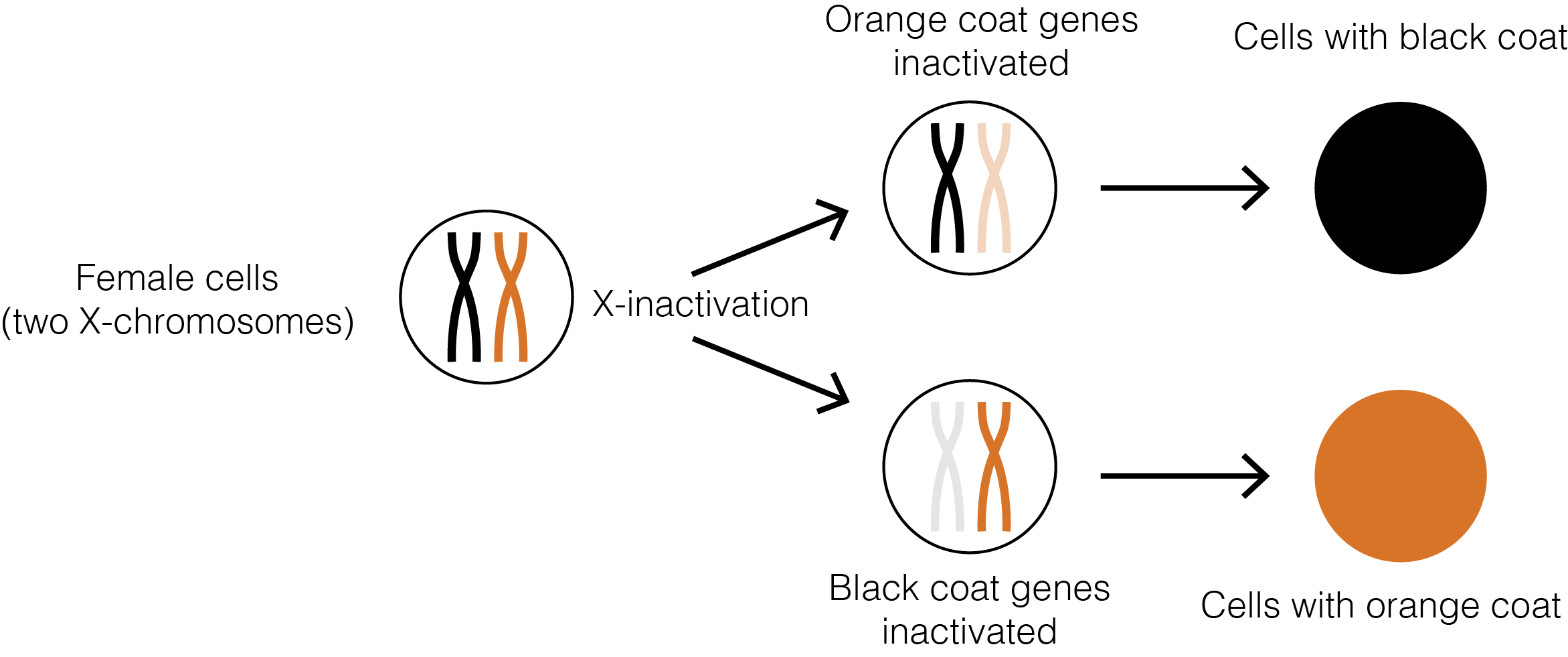
An English geneticist, Mary Lyon discovered the phenomenon of X-inactivation. In mammals, females have two X-chromosomes, while males have one X-chromosome (and a Y-chromosome). For a cell, having two copies of the genes on the X-chromosome is not ideal, so female cells inactivate one of their two X-chromosomes in order to maintain the appropriate dose of genes needed by their cells. Some cells inactivate the X-chromosome from mom, but others the X-chromosome from dad, and which one gets inactivated is a matter of chance.
Mary Lyon figured this out by studying tortoiseshell cats, which have a patchwork of orange and black coat colours, and are almost always females. The genes that determine coat colour in cats are located on the X-chromosome, and since the cat’s cells randomly turn off one or other X-chromosome, the result is a hybrid, patchy coat colour.
I remember learning about Mary F. Lyon in college, because we were taught that X-inactivation also goes by Lyonization, in her honour. Despite the fact that she has a whole phenomenon named after her, she was never awarded a Nobel prize. Some men have gotten it for less.Mikhail Tsvet
Mikhail Tsvet was a Russian botanist. He was interested in studying the pigments of a plant, and came up with a method to separate them, which he called chromatography, because it helped study (“-graphy”) colourful (“chromato-”) pigments from a plant. The most basic version – paper chromatography – is simple, but painfully slow, making for some boring lab practicals during my restless teenage years. The method was first published in 1906, but was ignored until it was rediscovered 25 years later, by which time Tsvet was no more. Today, many different forms of chromatography are workhorses of modern science, from pharmaceuticals to forensics to basic chemical and biomedical research. It is a method that has stood the test of time, and truly worthy of recognition.
So there we have it. These are three examples of scientists with notable contributions to Physics (Bose), Chemistry (Tsvet), and Physiology/Medicine (Lyon) who never won the dynamite prize, but are hereby awarded the Lebon prize. May this prize-less (but priceless?) posthumous award be an attempt to honour them, and their invaluable discoveries.